What were the most significant operational highlights that consolidated GlobalVision's position across the commercial real estate sector over the past year?
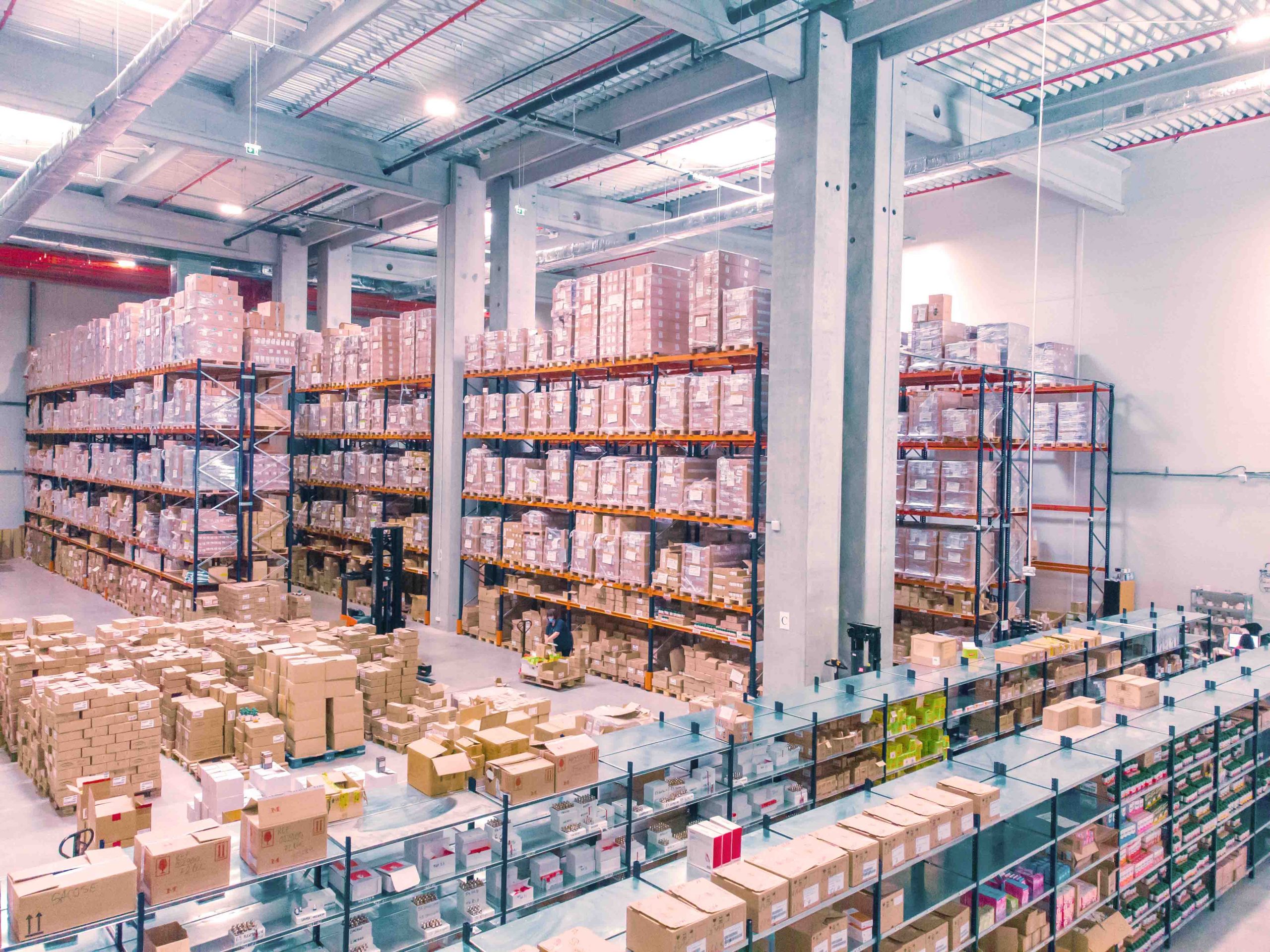
2025 was a year of active deployment and clear confirmation of our strategy. We completed two landmark investments, a retail park in Oradea anchored by one of the largest international food retailers operating in Romania, and a turnkey industrial facility delivered to a leading European aerospace group. Both projects demonstrated our ability to execute at a high level across different asset classes and to attract renowned organizations as tenants. Finally, we reached 100% occupancy at the Corner Office Building, further reinforcing the strength and attractiveness of our portfolio.
Beyond individual projects, we continued building the foundation of what Global Visionis becoming, a CRE investment platform, not just a developer. We formalized the Global Vision Investment Fund as the main investment entity and we are openingour capital structure to other investors. and These are not isolated deals andbeing part of a deliberate, long-term plan, heading into 2026 with an investment pipeline exceeding €150 million.
Which asset classes will receive the most significant capital allocation this year?
Retail leads in 2026, with over €50 million committed. We see structural demand forwell-positioned retail formats in secondary and tertiary cities across Romania,markets that remain underserved relative to their purchasing power and catchment potential.
Industrial and logistics continue to absorb meaningful capital, built around corridor positioning, tenant quality, and a long-term hold strategy. We are not chasing volume. We are assembling assets that perform through cycles.
Butit is important to be clear about the broader direction of GVIF. We arebuilding a multi-sector asset holder. Our goal is not to specialize in one or two asset classes and scale up, but rather to hold high-quality,income-generating assets across the full range of commercial real estate, including office, retail, industrial, and mixed-use.
Whatare your main objectives from an investment perspective on the retail side?
Our objective is to develop a portfolio of retail assets that generate resilient, long-term income from very good quality credit counterparts and excess yields. We focus on formats that serve genuine daily consumer needs: food-anchored retail parks, convenience-led galleries, and mixed-use schemes that combine retail, services, and logistics in an efficient format.
The key criteria for us is location quality relative to competition density. Welook for cities and catchment areas where the supply of modern retail is structurally insufficient, where demographics are growing, and where existing supply is either outdated or absent. From a tenant perspective, we prioritizelong-term, contractually secure relationships with a broad mix of both food andnon-food anchor tenants.
How did you decide to team up with Globalworth for a retail park in Constanța, andwhat is the demand for such projects in this region?
Thisis not a new partnership, the land has been co-owned by Global Vision andGlobalworth since 2019, with us leading the development process throughout. In 2025, our strategic focus on retail park development led to the decision to move this project forward. It is the only project in southern Constanța withthe permits and zoning allowing a development of over 10 hectares.
The underlying investment case is driven by strong but underserved demand in Constanța. As Romania’s second-largest city by economic activity and a key logistics gateway, the region has a growing year-round population, yet modern retail infrastructure has not kept pace. This creates a clear supply gap for well-anchored, modern retail parks that combine food retail, services, andc omplementary uses for the city’s expanding catchment area.
Beyond retail, what is the 2026 outlook for your industrial-logistics portfolio?
Weremain highly active in industrial and logistics. Our approach in this assetclass has always been built around three principles: positioning alongside astrategic EU/NATO transportation corridor, tenant quality, and asset longevity.Global Vision targets industries with strong and expanding demand fordevelopment, such as aviation, dual-use, and data centers.
In2026, we will continue to grow this part of the portfolio, both through newdevelopments and through the selective acquisition of stabilized assets wherethe fundamentals are compelling. We also target built-to-suit projects with astrong manufacturing component, where our broader objective is to support thedevelopment of cities and contribute to regional economic growth and greaterenergy independence.
What is your strategy for building the Global Vision Investment Fund (GVIF), whichaims for €1 billion in assets in the coming years?
GVIF targets reaching AUM of €1.0bn over the next 5 years. It is the vehicle through which we are transforming Global Vision from a privately held developer into a listed investment platform that is accessible to institutional and international capital. The fund targets investments in CRE, Green Energy, and AI-tech, three sectors where we see the fastest growth of and deepest structural demand consequently generating pure alpha.
We seek achieving the target by deploying a robust fundamentals-driven investment strategy or quality value investment. We do not seek growth at any price, nor speed over quality, and we believe that our fundamental sector positioning will result in achieving sustainable asset valuations that will consolidate our AUMa round the $1.0 bn target in medium term.
Our investment platform is supported by a group of service providers and affiliated companies and strong in-house capabilities, which creates a unique value proposition for our investors.
Howis Global Vision transitioning from a traditional developer to atechnology-driven investor in contextual AI?
The transition is already in motion. We have built our own private AI-first platform, AHEAD, which is deployed and in use with some of our clients. It runs on-premises and works directly on live operational data across the asset. Attenant level, it supports production optimization, Vision Quality Check, predictive maintenance, and energy efficiency. At asset level, security and drone-based building inspection. This is what the transition looks like inpractice: the same asset driving better production output and lower operatingcosts.
How is your strategy of focusing on high-quality assets and long-term leasesensuring resilience against current economic cycles?
We found inspiring concepts in the investment strategies of Buffet/Munger of quality value. We seek margin safety (e.g. top credit quality tenants in CRE,occupancy, macro and local fundamentals), intrinsic value and downside protection. Resilience is built before the cycle turns, not during it. That is the philosophy we have applied since the beginning.
Long-term leases are the clearest expression of that philosophy. When a leading retailer or a major European manufacturer signs a long-term lease on one of our assets,they are making a statement about the quality of what we have delivered. That contractual stability insulates us from short-term volatility in yields or financing costs, and it gives our investors a predictable income stream regardless of the macro environment. We also seek to hedge away allnon-industry sector risks that can be hedged at a reasonable cost.